

Children’s Week: A Meaningful Opportunity for Early Childhood Educators
Children’s Week is more than a date on the calendar. For early childhood educators and childcare centres, it is a chance to celebrate children’s rights, amplify their voices and create learning experiences that help every child feel seen, safe and proud of who they are. In 2026, Children’s Week runs from Saturday 24 October to…

Children’s Week is more than a date on the calendar. For early childhood educators and childcare centres, it is a chance to celebrate children’s rights, amplify their voices and create learning experiences that help every child feel seen, safe and proud of who they are.
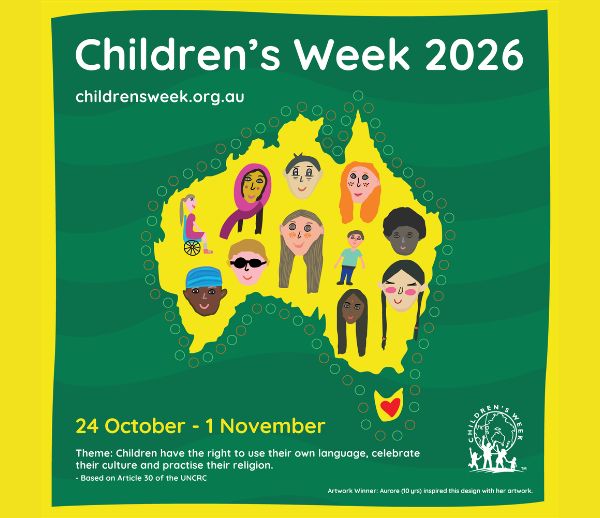
In 2026, Children’s Week runs from Saturday 24 October to Sunday 1 November. The national theme is: “Children have the right to use their own language, celebrate their culture and practise their religion.” It is based on Article 30 of the United Nations Convention on the Rights of the Child.
For services working with children from diverse cultural, linguistic and faith backgrounds, this year’s theme is especially relevant. It invites educators to reflect not only on what children learn, but on how children experience belonging every day.
What Children’s Week is all about
Children’s Week is Australia’s national celebration of children and their rights. It recognises children’s talents, skills, achievements and right to enjoy childhood, be heard and thrive. Events are held across the country by schools, early childhood services, councils, community organisations and families.
The week is grounded in the United Nations Convention on the Rights of the Child, which sets out the rights all children should be able to enjoy. Children’s Week encourages communities to listen to children, value their perspectives and create environments where they can participate meaningfully. childrensweek.org.au
For childcare centres, this aligns naturally with the principles of the National Quality Framework and the Early Years Learning Framework.
Why the 2026 theme matters
This year’s theme focuses on children’s right to use their own language, celebrate their culture and practise their religion.
For many families, language, culture and faith are deeply connected to identity. When a child hears their home language welcomed in the room, sees their family traditions reflected in the environment, or has space to share what is important to them, they receive a powerful message: You belong here.
That sense of belonging supports confidence, wellbeing and engagement in learning. It also strengthens relationships between educators, children and families.
Practical ideas for childcare centres
There are many ways to mark Children’s Week without needing a large budget or complicated program. The most meaningful activities are often the simplest: those that give children a voice and invite families into the learning environment.
Celebrate languages in everyday routines
Invite children and families to share greetings, songs, stories or familiar words in their home languages. These can be displayed on a welcome wall, included in morning routines or used during group time.
Educators might ask families to record a short greeting, share a favourite lullaby, or contribute a simple phrase children use at home. Even a few words can help a child feel recognised and connected.
Create a culture and identity display
Invite families to contribute photos, objects, recipes, artwork or stories that represent their family traditions. A display should be collaborative rather than decorative — children can help choose what is included and talk about why it matters to them.
Be mindful to avoid asking families to represent an entire culture on behalf of others. Focus on each family’s own lived experience and invite participation in ways that feel comfortable and voluntary.
Use storytelling and play
Books, puppets, music, dramatic play and sensory experiences can help children explore identity, family and community in age-appropriate ways. Educators can extend conversations by asking open-ended questions such as:
-
“What makes your family special?”
-
“What language do you hear at home?”
-
“What do you like to celebrate with your family?”
-
“How can we make everyone feel welcome here?”
These conversations should be handled sensitively, with educators following children’s cues and respecting family privacy.
Connect with your local community
Children’s Week is also a good time to invite local community members, elders, libraries, playgroups or cultural organisations to take part. A visit, shared story or community event can broaden children’s understanding of the world around them.
Many councils and early childhood services host in-person and online events during the week, making it a useful opportunity to connect with families beyond your own service.
Supporting educators to participate
For Children’s Week to feel authentic, it needs to be supported by the whole team—not left to one educator or room.
Centres can use team meetings to discuss:
-
How children’s home languages and cultures are currently reflected in the environment
-
Whether every family has a genuine opportunity to contribute
-
How educators respond when children share their identity, beliefs or traditions
-
What resources, training or community connections might strengthen inclusive practice
This reflection is valuable regardless of how large or diverse a service’s community is. Every child has a culture, a family story and a way of experiencing the world.
Making it more than one week
The greatest value of Children’s Week comes when it sparks ongoing change. A language welcome wall can become a permanent feature. A family story project can continue throughout the year. A conversation about inclusion can inform curriculum planning, resource selection and educator professional development.
Children’s Week should not be a checklist activity. It is an invitation to listen more closely to children and families, and to build a service culture where every child’s identity is treated as an asset.
When children see their language spoken, their culture respected and their beliefs acknowledged, they learn something powerful: they matter, they belong, and their voice has value.
That is a lesson worth celebrating—not just during Children’s Week, but every day.
Related Articles
Children’s Week: A Meaningful Opportunity for Early Childhood Educators
NAIDOC Week 2026: Celebrating 50 Years of Deadly in Your Early Childhood Setting
